
Scientific Evidence
Evidence, held to four standards ›
We characterise our cells against defined standards and report what the data show. Our aim is to give partners a clear, documented basis for their own development decisions, not to overstate what is known.
The four pillars
How we hold quality ›
Identity
Characterising what the cells are, by defined markers and methods.
Safety
Assessing the cells against defined safety criteria.
Potency
Measuring functional activity using defined assays.
Consistency
Demonstrating reproducible results across batches.
Characterisation
Defined against clear criteria ›
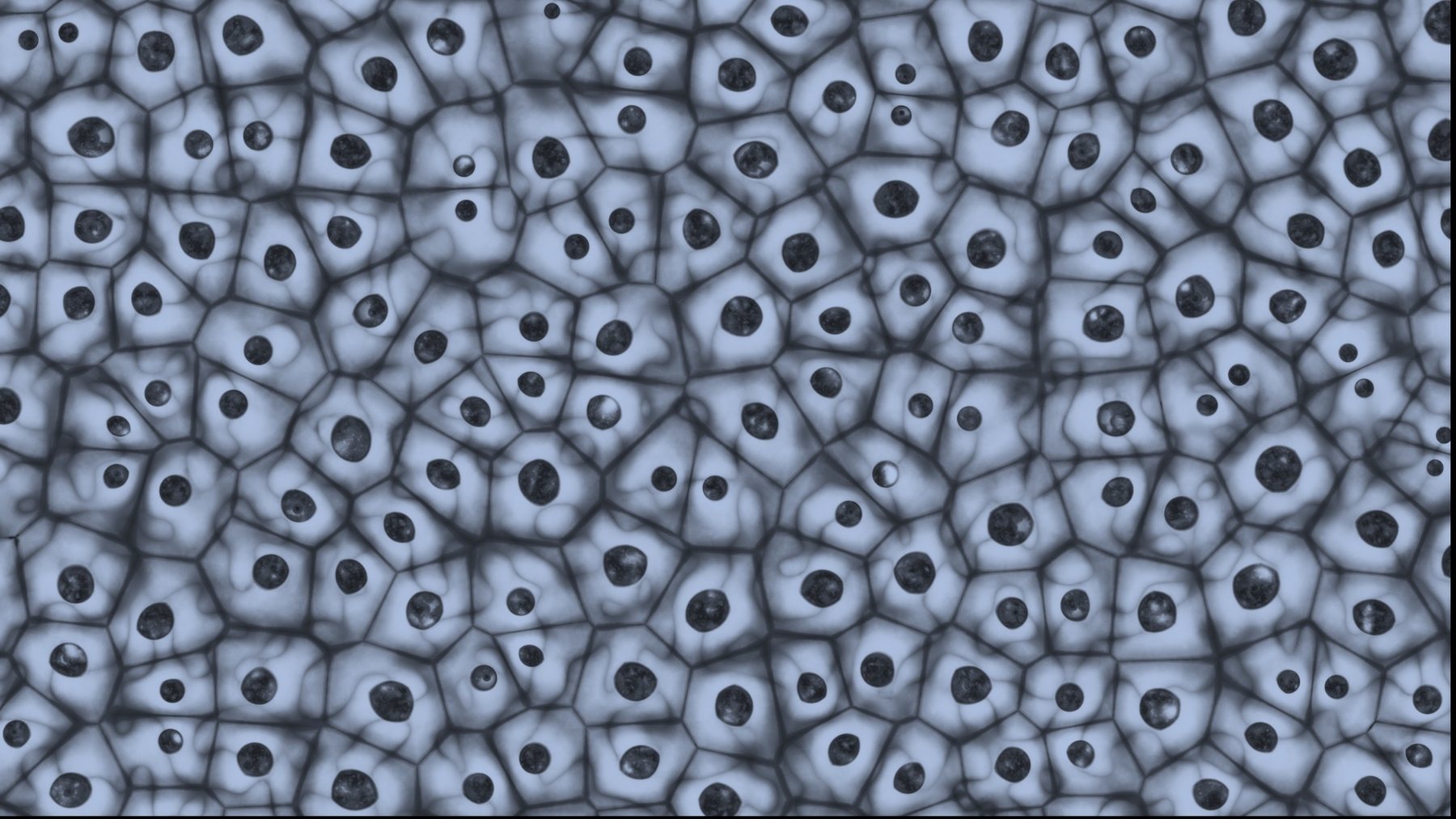
Cells are characterised against the ISCT minimal markers for mesenchymal stromal cells. Illustrative of how we report identity, not a specific batch result.
Why amniotic fluid cells
Compare the sources ›
A qualitative comparison of how neonatal MSCs are characterised in the published literature, relative to adult bone-marrow MSCs. Toggle a source to see the difference. Indicative, not a head-to-head assay.
AF-MSCs proliferate rapidly; bone-marrow yield and growth decline with donor age.
AF cells express low immune-activating markers, with anti-inflammatory properties.
AF-MSCs resist replicative senescence relative to bone-marrow MSCs.
AF lines retain a normal karyotype over extensive expansion.
AF uses otherwise-discarded term fluid; marrow requires an invasive donor procedure.
Data packages
A documented evidence base, available on request ›
Alvion Bio maintains structured data packages for the Alvion neonatal MSCs. Qualified partners can request access to support their evaluation and development programmes.
Laboratory & characterisation
Identity, characterisation, potency and proliferation, and immunomodulation data.
- Characterisation to defined criteria
- Potency and proliferation
- Immunomodulation
Pre-clinical studies
Pre-clinical study data supporting the platform, available to qualified partners under appropriate terms.
In-human safety & tolerability
Clinical safety and tolerability data from in-human experience, available to qualified partners under appropriate terms.
Access is provided on request. Data packages are shared with qualified partners under appropriate confidentiality terms.
Email us for access ›Publications
The science behind the technology ›
A selection of the publicly available, peer-reviewed literature on mesenchymal stem cells and, in particular, amniotic fluid-derived cells. These are reference works in the field, provided for context; they are not studies of Alvion Bio products.
Isolation of amniotic stem cell lines with potential for therapy.
Nature Biotechnology, 2007;25(1):100–106.
Foundational paper: human neonatal MSCs double in ~36 hours, expand over 250 population doublings while retaining long telomeres and a normal karyotype, are non-tumorigenic, and are broadly multipotent.
Minimal criteria for defining multipotent mesenchymal stromal cells: the ISCT position statement.
Cytotherapy, 2006;8(4):315–317.
The standard definition of an MSC: plastic adherence, expression of CD73, CD90 and CD105, absence of haematopoietic markers, and trilineage differentiation. The criteria we characterise against.
Mesenchymal stromal cells from amniotic fluid are less prone to senescence than those from bone marrow: an in vitro study.
Journal of Cellular Physiology, 2018;233(11):8996–9006.
Direct comparison showing AF-MSCs proliferate well and resist replicative senescence relative to bone-marrow MSCs, with differences in DNA-repair capacity.
Isolation and molecular characterization of amniotic fluid-derived mesenchymal stem cells obtained from caesarean sections.
Stem Cells International, 2017;2017:5932706.
Characterisation of AF-MSCs from full-term caesarean-section fluid, supporting an ethically obtained, otherwise-discarded source: low immunogenicity, anti-inflammatory properties, high proliferation and broad differentiation.
Characteristics of human neonatal MSCs.
PLOS ONE, 2015;10(4):e0123350.
AF-MSCs show high proliferative capacity and multilineage potential, express HLA-ABC but not HLA-DR or CD40 (indicating low immunogenicity), and formed no tumours in vivo in the conditions tested.
Neonatal-origin MSCs versus adult bone marrow.
Stem Cell Research & Therapy.
MSCs of neonatal origin show superior proliferation, lower immunogenicity and potentially fewer acquired mutations than adult bone-marrow MSCs, supporting them as a source for clinical-grade supply.
References to third-party literature are provided for scientific context and describe mesenchymal stem cell biology in general. They do not constitute claims about Alvion Bio products or clinical outcomes. Links open external sites.